
A mislabeled allergen pack. A leaking seal on a meat package. A missing insert in a ready meal. In the food and pharmaceutical industries, these aren't minor issues — they trigger recalls, reputational damage, and six-figure costs. Yet many plants still rely on manual visual inspection. The problem: after two to three hours of monotonous checking, a human inspector's detection rate measurably drops — from an initial 80% to below 60%. At line speeds of 1,200 units per minute, reliable manual inspection simply isn't possible.
Automated visual inspection solves this problem at the root: it combines high-resolution camera technology with AI-based image processing to check shape, color, surface, label, and packaging integrity in real time — reproducibly, without gaps, around the clock. In RaymanTech's combo systems, it works hand in hand with x-ray technology: while the camera inspects surface, label, and seal seam, the x-ray system detects foreign bodies, fill levels, and missing components inside the package. Where several employees once inspected per shift, a single system now handles inspection at speeds above 1,200 units per minute.
On this page, you'll learn how automated visual inspection systems work, which inspection criteria they cover, and how the technology differs from optical sorting.
Automated visual inspection refers to the camera-based, automated inspection of products for optically detectable quality characteristics and defects — also known as machine vision inspection, or informally a vision inspection machine. The system captures an image of the object, analyzes it with image-processing algorithms, and compares the features against defined quality specs. If a product deviates — a mispositioned label, a faulty seal seam, a shape deviation — it's automatically rejected.
Unlike manual visual inspection, the automated version works objectively and with consistent precision, regardless of shift duration. Modern visual inspection systems achieve detection rates above 99% and inspect every single product instead of just samples — for QM managers, that means demonstrable inspection depth for auditors and fewer complaints. The range spans from simple presence checks to surface analysis with deep-learning algorithms that catch the finest scratches or texture deviations.
A visual inspection system has three coordinated components:
Area-scan cameras capture the entire object for stationary checks, line-scan cameras scan continuously at high speeds, and 3D cameras add height data for geometry and volume checks.
At least as critical as the camera — depending on the task, systems use incident, transmitted, coaxial, or structured lighting to maximize contrast between a defect and a good surface.
It extracts edges, textures, colors, and geometries in real time and compares them against reference values — rule-based with fixed thresholds, or AI-driven from learned patterns, for example with labels showing batch-dependent position or print deviations.
Depending on configuration, a single pass covers several quality characteristics:
01
Deformations, missing parts, dimensional deviations — for example shape control for confectionery or completeness checks for ready-meal trays.
02
Scratches, cracks, discoloration, porosity, inclusions, and texture deviations.
03
Comparison against reference values, such as ripeness or browning level for food products, or brand-color compliance for packaging.
04
Presence, position, code legibility, and correctness of batch number, expiry date, and allergen labeling — one of the most common causes of recalls in the industry.
05
Seal and closure checks, completeness, damage — critical for MAP (modified atmosphere) packaging.
06
Overfilling and underfilling, which violates weights-and-measures regulations or costs money as product giveaway. In the combo system, the x-ray system additionally handles fill-level control in opaque packaging.
Rule-based image processing works reliably for clearly defined defects. Many defects, however, show high variability — a slightly shifted label, an irregular seal seam — that's difficult to capture in rigid rules. This is where an AI visual inspection system comes in: RaymanTech combines classic, rule-based image processing with AI-powered image recognition (isiray) as one of several building blocks in system design. Deep-learning models learn what a defect-free product looks like from training images, detect even unknown defect variants, are more robust against shadows or dust, and can be retrained directly in the production environment. In practice, RaymanTech combines both: simple checks rule-based, complex tasks like label verification AI-driven.
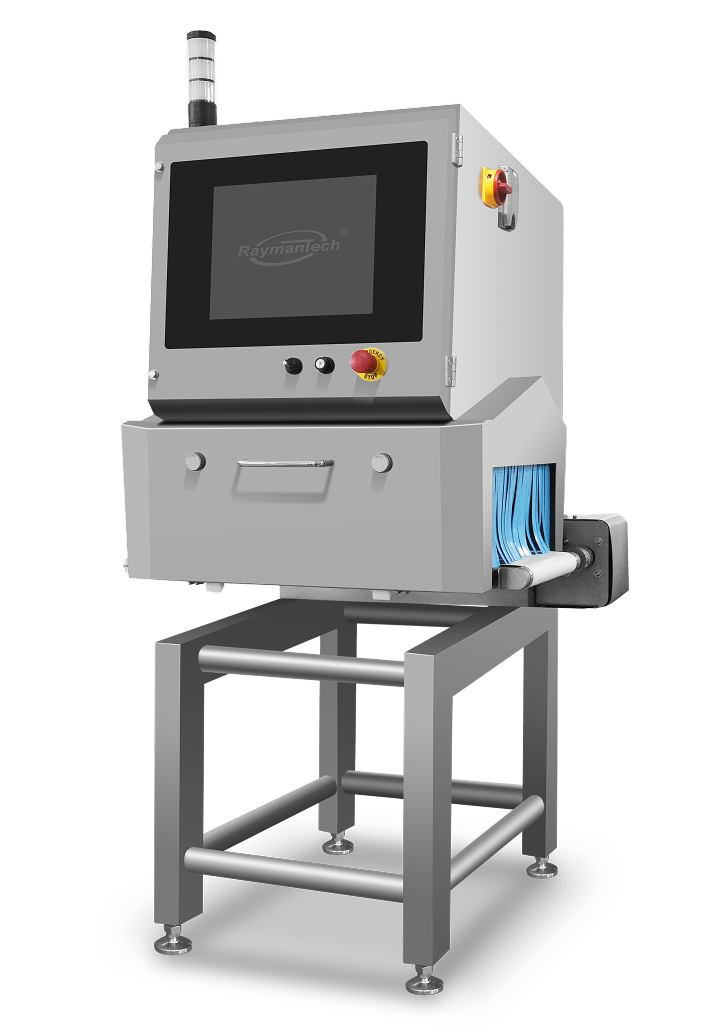
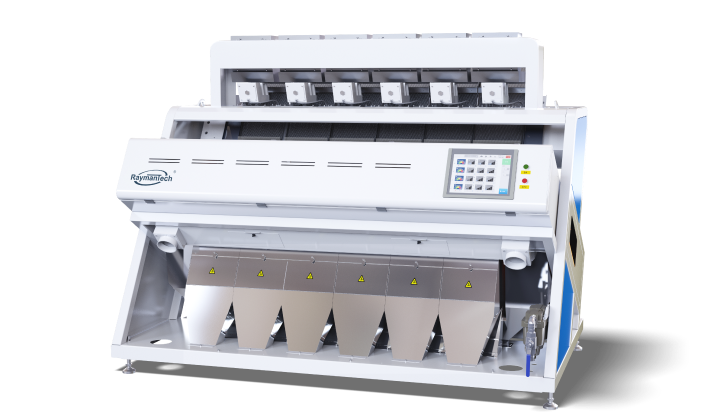
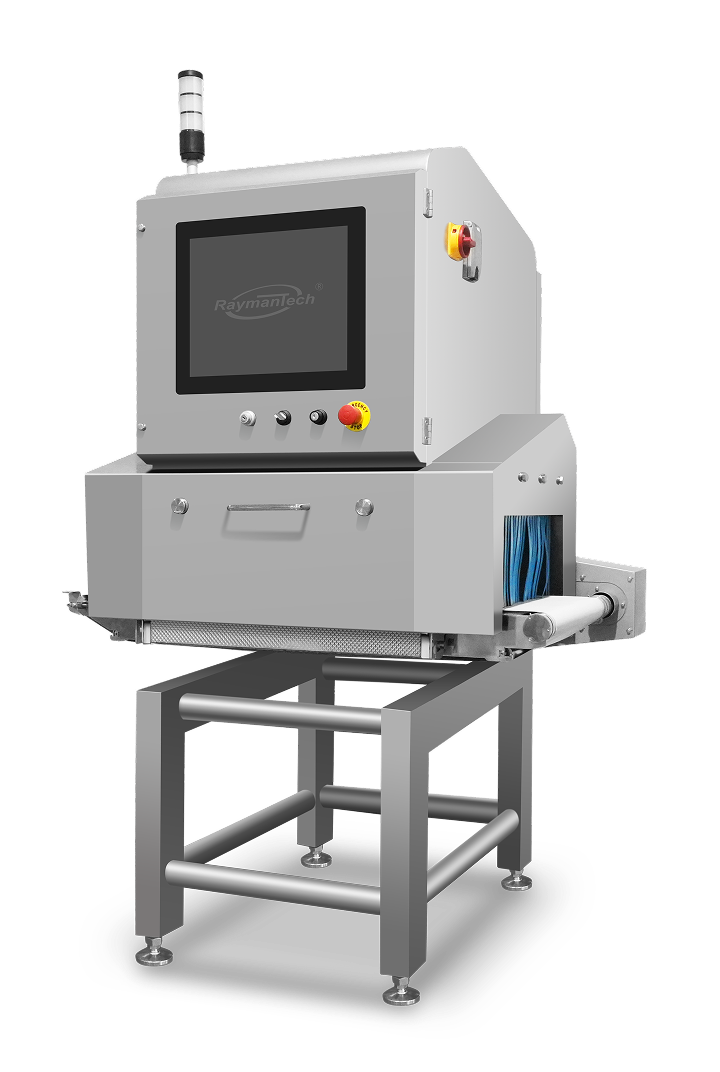
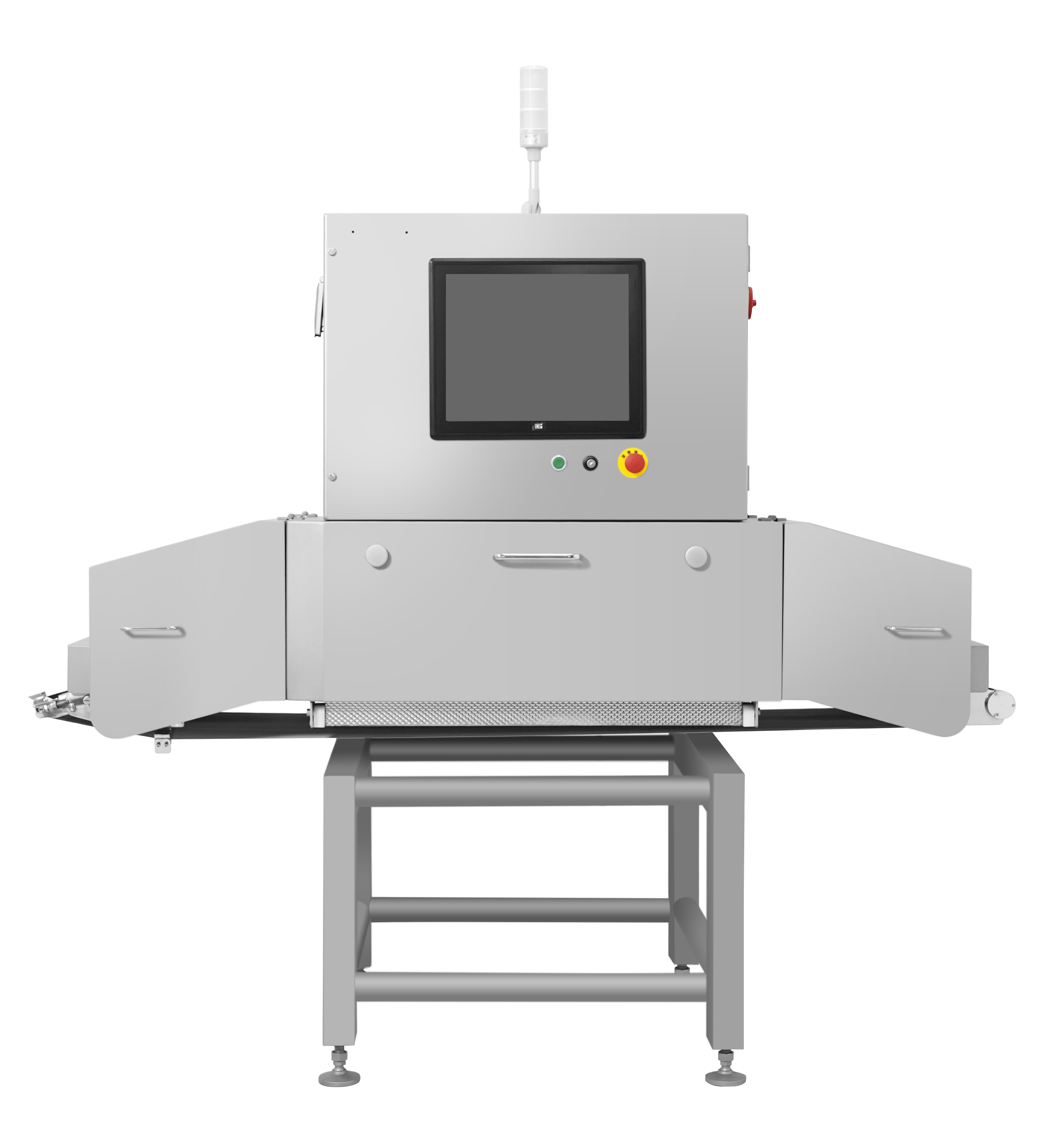

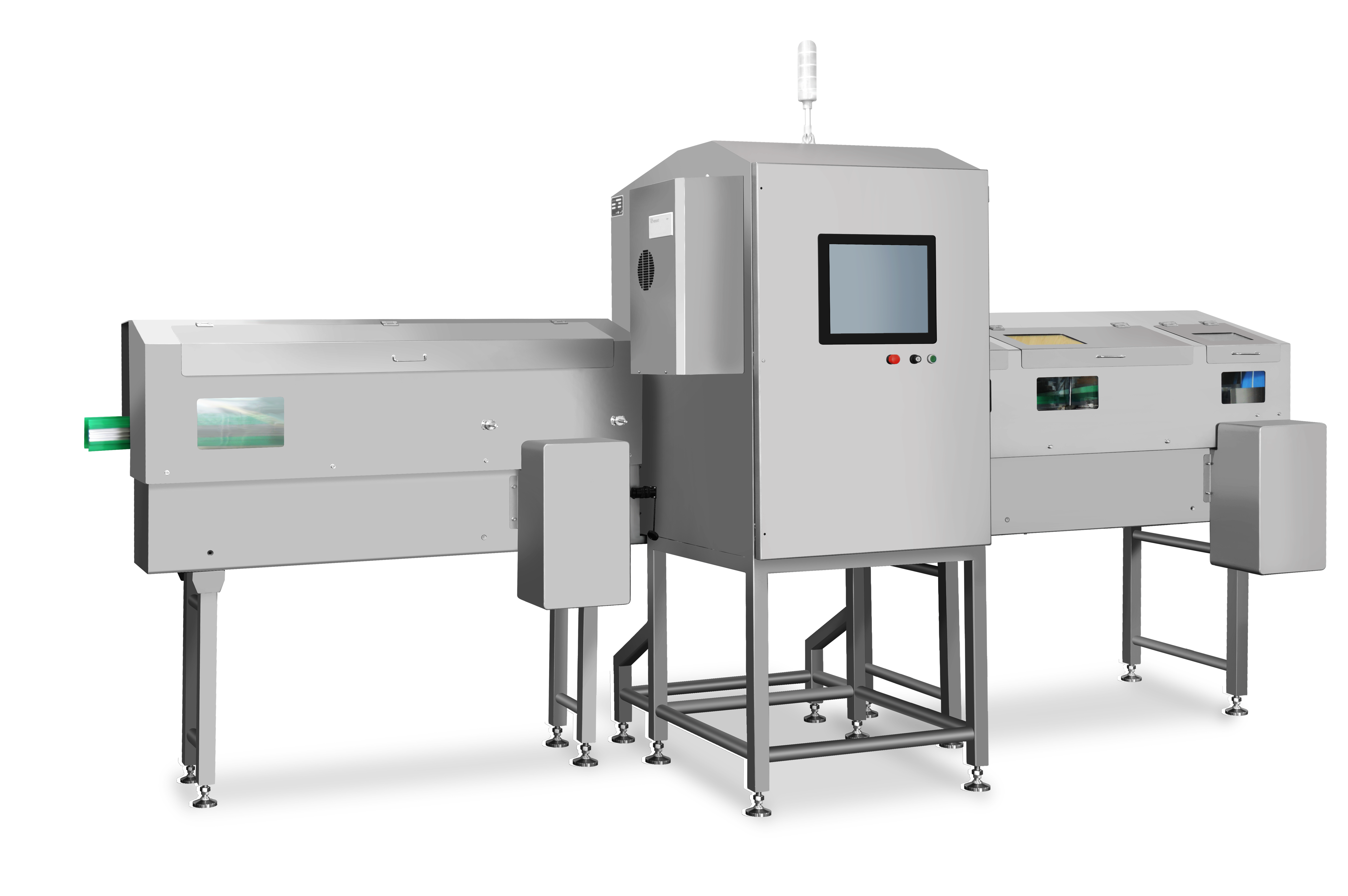

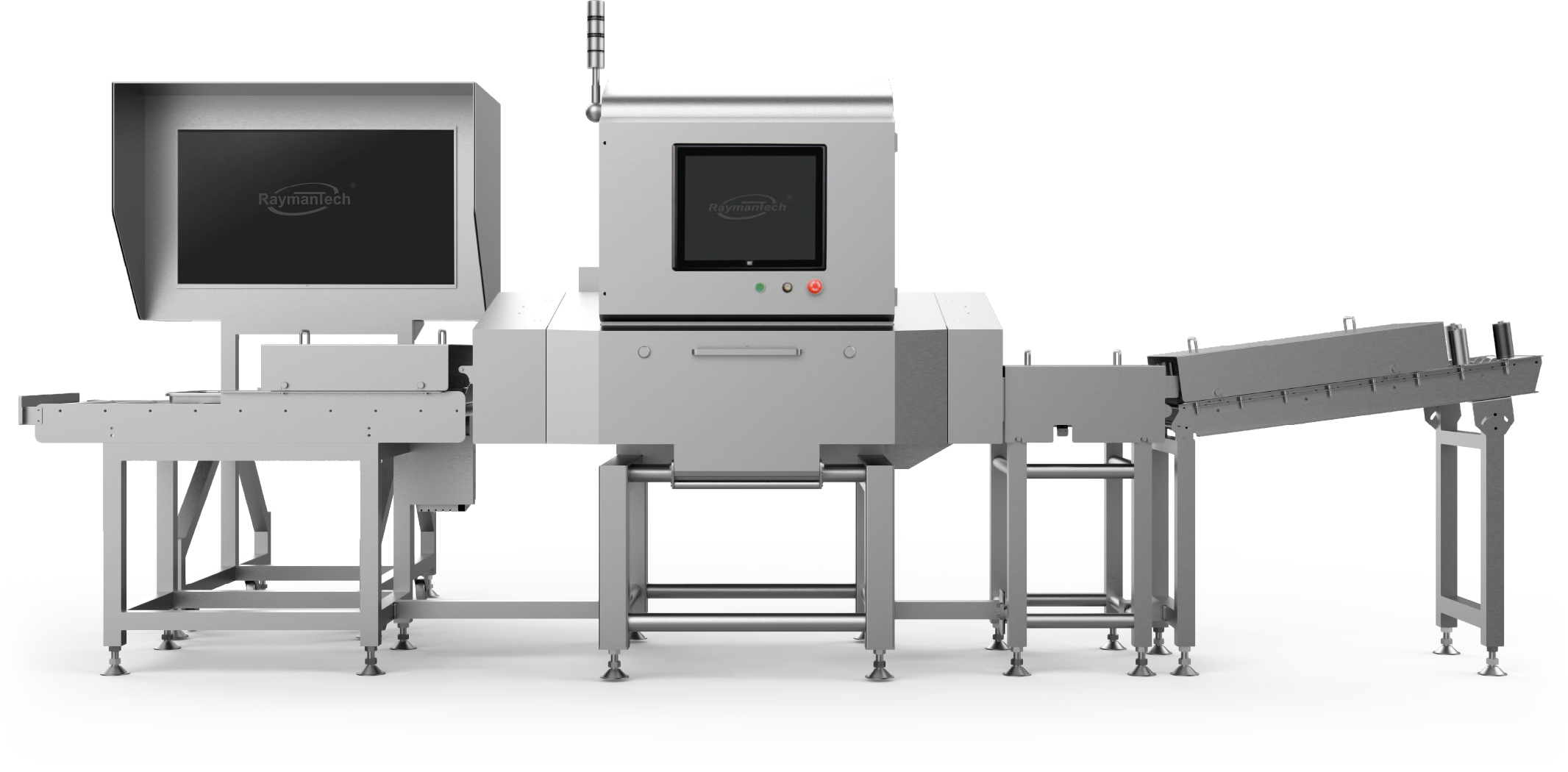
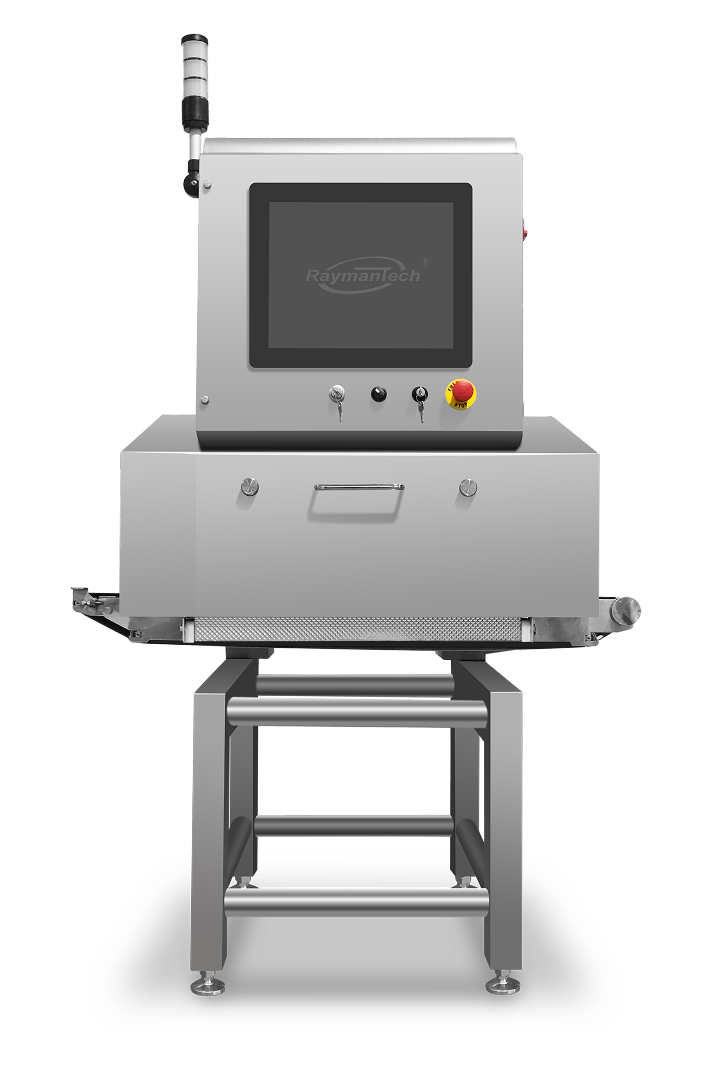
In the food and beverage industry — RaymanTech's core market — visual inspection checks color, shape, and surface on baked goods, meat products, and ready meals, plus labels, fill levels, and packaging integrity, complementing foreign body detection, which targets contaminants not visible inside the product. In the pharmaceutical industry, it secures particle control, closure integrity, and labeling for vials, syringes, and blister packs, in line with pharmaceutical visual inspection guidelines — GMP-compliant and audit-traceable, with particular rigor for visual inspection of sterile products, where even a minor closure defect can compromise sterility. Other application areas include automotive and metal processing (surfaces, weld seams, 3D geometries), electronics manufacturing (optical inspection of solder joints and circuit boards), and packaging (print image and seal seam inspection).
The terms are often confused, but they describe different processes:
The system rates every product as "good" or "bad"; optical sorting classifies a heterogeneous material mix into fractions. On many lines, the two complement each other: sorting upstream, inspection on the finished product.
Visual inspection is integrated inline, directly into the production line — mechanically (camera, lighting, rejection at the conveyor), electrically (PLC connection), and via standard interfaces (OPC UA, REST API, Profinet) to MES and QM systems. Every result is documented with an image, timestamp, and defect classification — fully traceable.
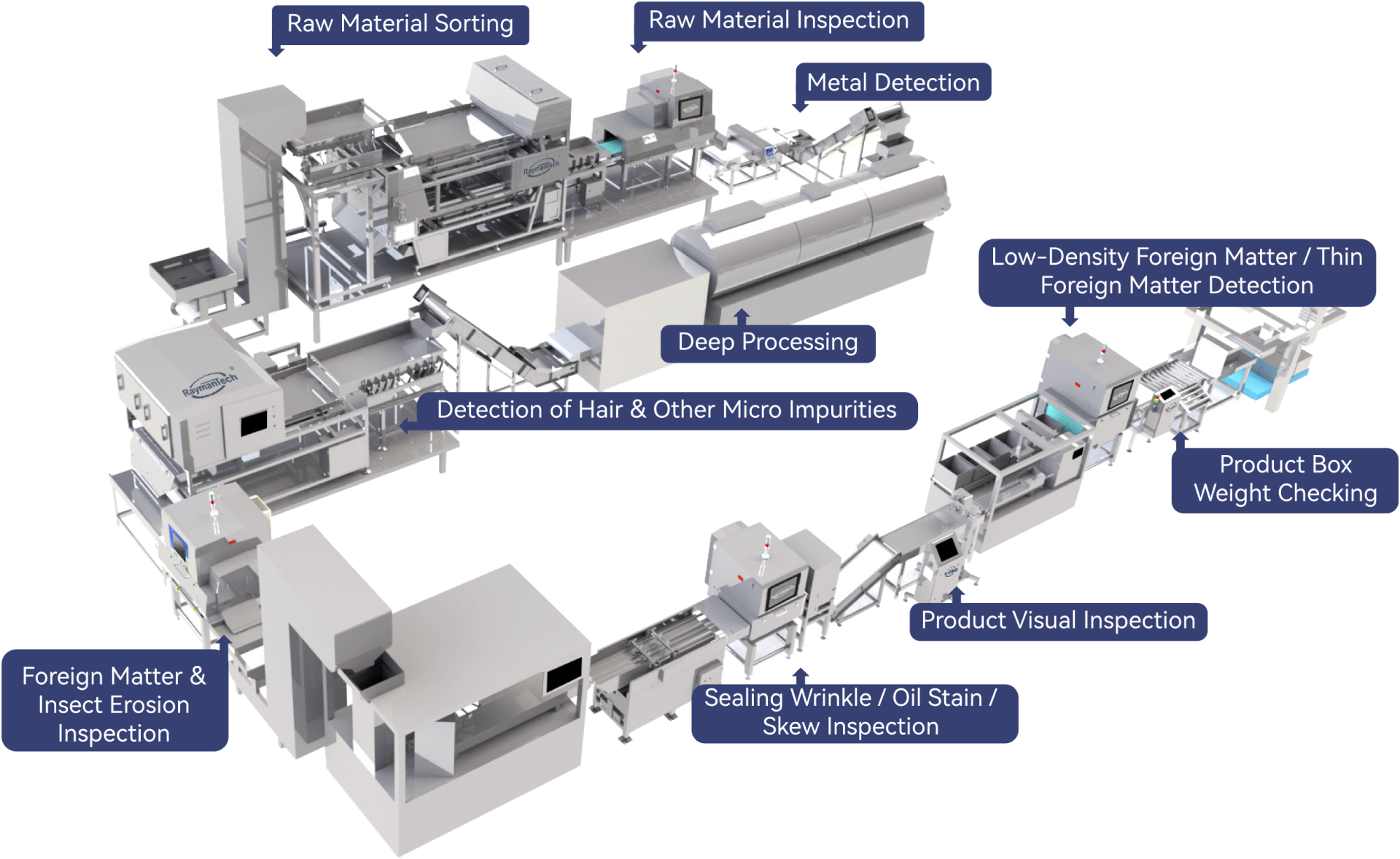
It delivers its full value as part of a holistic concept: in RaymanTech's WCIS (Whole Chain Inspection Solution), automated visual inspection combines with foreign body detection (x-ray, metal detection) and checkweighing into one continuous system — visible and non-visible quality parameters in a single pass, from one source instead of siloed solutions from different manufacturers. Learn more on the product inspection overview page.
The investment typically pays for itself within 12 to 18 months: a system replaces two to three manual inspection stations per shift, reduces product giveaway through precise fill-level control, and cuts complaint and recall costs by up to 90%. Overall, inspection costs drop by up to 80% compared to manual control.
Not sure whether automated visual inspection meets your requirements? Send your products to our test center in Germany — within a few days, we'll show you the detection rates your product range can achieve.
Request a test run — or speak directly with our application engineers about your use case.
RaymanTech supports you from feasibility analysis through ongoing operation, backed by hundreds of installations in the food and pharmaceutical industries.
Let's work out what your line needs — we advise you across technologies.

In most cases, yes. Automated systems clearly outperform manual inspection in detection rate, speed, and consistency — especially on high-speed lines, where manual inspection isn't feasible to begin with. A free test run shows which tasks on your products can be automated right away.
All optically visible deviations: surface defects, shape deviations, missing components, labeling errors, print defects, fill-level deviations, and packaging damage. In a combo system with x-ray, foreign bodies inside the product and count verification are added as well.
It checks every product against quality criteria and classifies it as defect-free or defective. Optical sorting separates a material mix into different fractions based on optical characteristics.
AI enables detection of variable defect patterns that are hard to define with rule-based image processing — for example, slightly shifted labels or irregular seal seams. Among other tools, RaymanTech uses AI-powered image processing, isiray, as one of several building blocks.
Yes. Visual inspection systems are modular and connect via standard interfaces (OPC UA, Profinet, REST API). RaymanTech factors in the space constraints of your existing line during system design.
